
Keeping control in an AI world
We’ve been there before, perhaps even more than once. A new, profoundly disruptive technology arises, calling into question established practices and processes. But while the AI revolution forces all of us to stay curious and become artificial fast, it also reminds us to remain human. If we are to make the most of AI’s promise, it’s crucial to preserve human agency and retain the final say.
When it comes to the tug of war between humankind and machines, it’s astonishing how little difference 135 years make. In May of 1891, Pope Leo XIII took on the upheavals and disruptions of the Industrial Age in an encyclical entitled Rerum Novarum: “The momentous gravity of the state of things now obtaining fills every mind with painful apprehension; wise men are discussing it; practical men are proposing schemes; popular meetings, legislatures, and rulers of nations are all busied with it – actually there is no question which has taken deeper hold on the public mind.”
Fast forward to 2026, when Pope Leo XIV released his take on the potential and problems of AI spreading like wildfire in business and private life. He chose Magnifica Humanitas as the title to drive home his point that AI should be a tool like many that humans have discovered before. “We must avoid the misconception of equating this type of ‘intelligence’ with that of human beings,” the Pontiff wrote. “So-called artificial intelligences do not undergo experiences, do not possess a body, do not feel joy or pain, do not mature through relationships and do not know from within what love, work, friendship or responsibility mean.” Looking at the realm of economics and the risk of putting millions out of work, he commented that “work is not simply an instrument … it is a requirement of the human condition, a normal path toward maturity, development and personal fulfillment.”
What are leaders to make of this dilemma? On the one hand, evidence is mounting that AI tools do indeed make (knowledge) workers more productive and can speed up the innovation cycles that keep modern organizations competitive. On the other, doubts keep growing about rising costs and how much control humans should cede to these new tools.

While the preceding volume of Think:Act Magazine’s “Becoming Artificial” shone a light on what it takes to “become artificial” – acquiring knowledge about and mastery of AI tools in an organization – this issue attempts to look at the same questions through a different lens. What it means to “remain human” when so many mundane tasks and increasingly complex activities are being augmented or taken over by agentic software that at times seems to exhibit a mind of its own.
The issue plants its guideposts in uncharted territory, tracing how curiosity and mindfulness should govern the application of AI tools. This exploration ranges from designing AI systems that prioritize integrity and alignment with human values to how to avoid the commoditization trap with proprietary data applications, organizational culture and deep implementation expertise. It continues with a closer look at hiring in the age of AI, to a critical evaluation of the future – and meaning – of work. Embodied AI via spatial computing and armies of robots, finally, brings new regulatory and safety challenges.
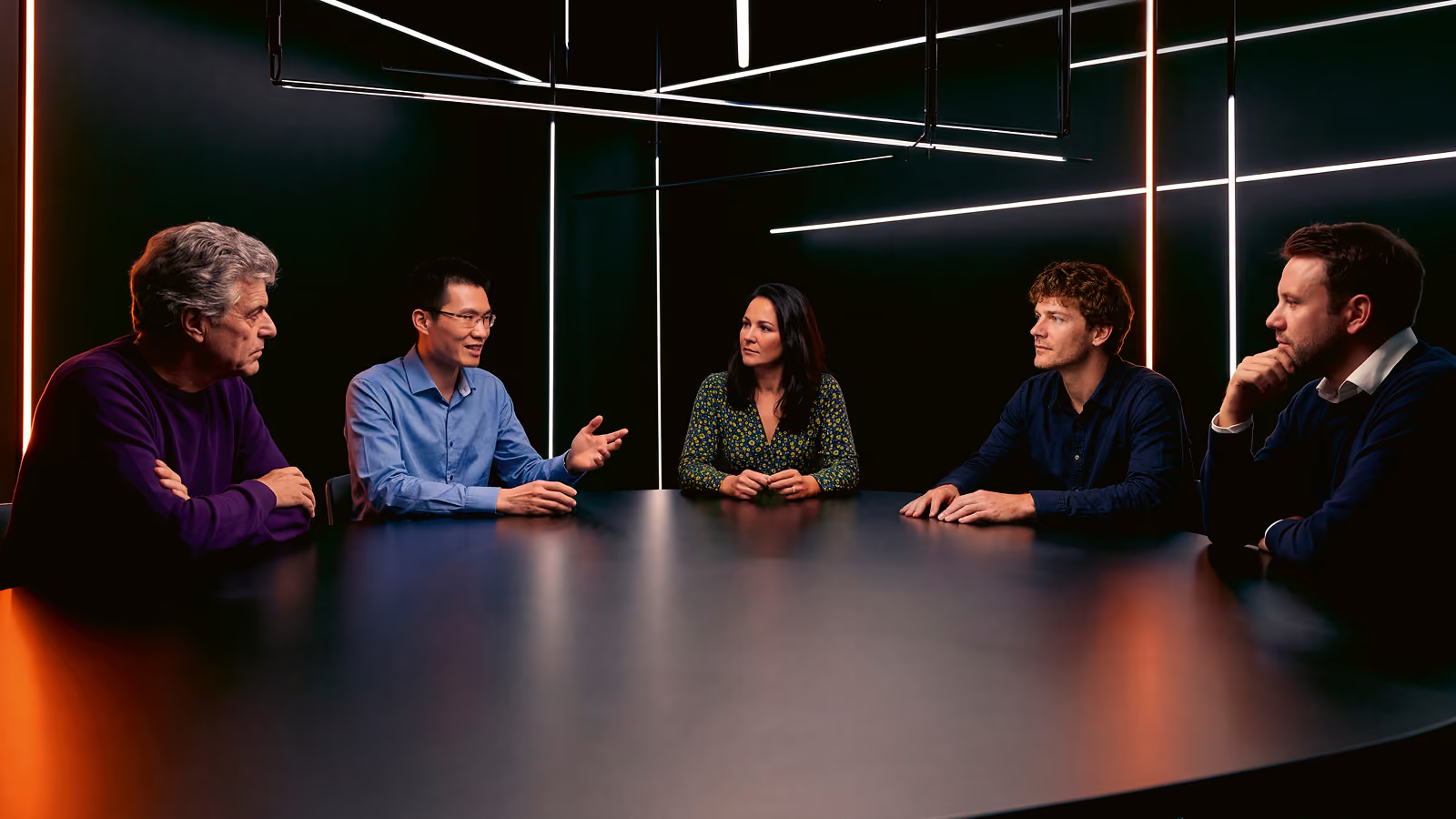
Remaining human, as our second panel of five preeminent AI thinkers and practitioners argue, is about availing yourself of new tools but always recognizing and capitalizing on the strengths that are uniquely ours: expertise forged under social interaction, true empathy and listening skills. Humans ought to retain control and have the final say while encouraging human-machine interaction that lets both sides learn from each other.
Straight from the experts
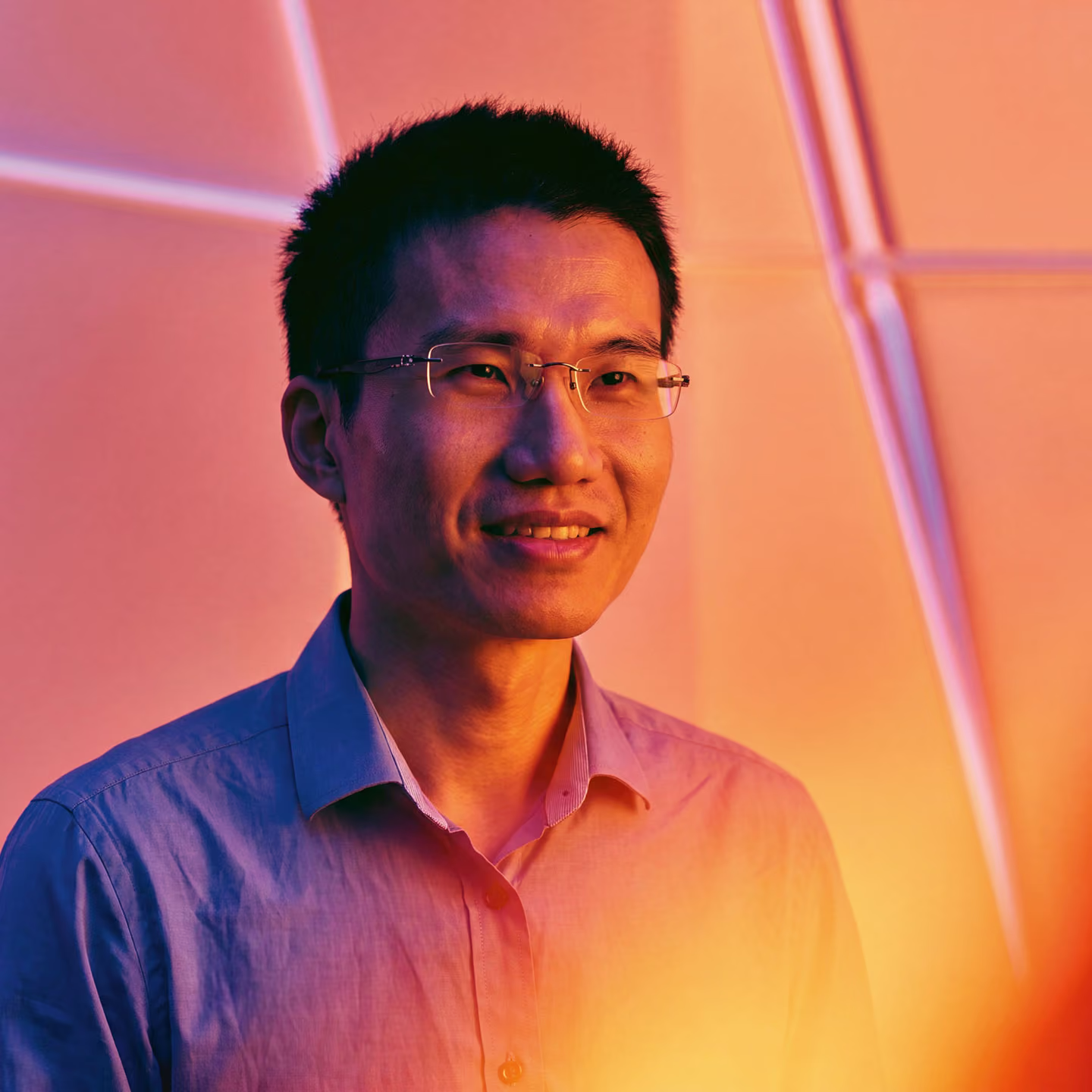
Kaifu Zhang is the founder of drillr.ai, a company that builds economic institutions for the agent economy. Until early 2026, he was vice president at Alibaba Group, leading search, recommendation and GenAI at the company’s e-commerce group. He previously taught at Carnegie Mellon University’s Tepper School of Business and earned his PhD from INSEAD.
What is your greatest hope and your greatest fear for the coming age of AI?
My biggest fear is that the “free market for knowledge,” aka the human internet as we knew it, will break down. As the cost of creating content goes to zero, traditional internet infrastructures such as search engines and recommendation systems will struggle to cope as supply of content goes to infinity. I want to help build a new internet infrastructure for truthful, curated and high-quality content for human beings.
How do you see the nature and essence of leadership evolving now as AI starts to become even more pervasive and powerful?
AI will make teams smaller, the boundaries of roles more blurred and productivity across team members more uneven. Leaders who are personally in the trenches and getting their hands dirty will adapt well in the age of AI.
What critical skills do leaders need to acquire – and in what time frame – to remain both relevant and in charge?
Empathy is particularly crucial for managing this transition. It requires a top leader to have a down-to-earth, microscopic understanding of the organizational process and its people. This is not only a moral question, but also a key factor that determines a company’s competitiveness.
What are the crucial watershed moments when leaders need to decide whether to “hire” or “fire” their AI?
All enterprises will hire AI in one way or another. AI cannot and should not be fired, but should be hired carefully.
What role do you see Gen Z and Gen Alpha playing in this new world of enhanced and automated work?
Gen Z and Gen Alpha will see a job market where soft skills (creativity, communication and empathy) matter more than hard memorized skills.
What role do you see Gen Z and Gen Alpha playing in this new world of enhanced and automated work?
Gen Z and Gen Alpha will see a job market where soft skills (creativity, communication and empathy) matter more than hard memorized skills.
What are the particular areas of decision-making that you think should be reserved for humans and not encroached upon by AI systems?
High-stakes decision-making that is context-dependent such as health care, finance, auditing, legal and science/social science research. It is extremely important that humans provide a clean context for AI, rather than letting the agentic system gather information on the open internet.
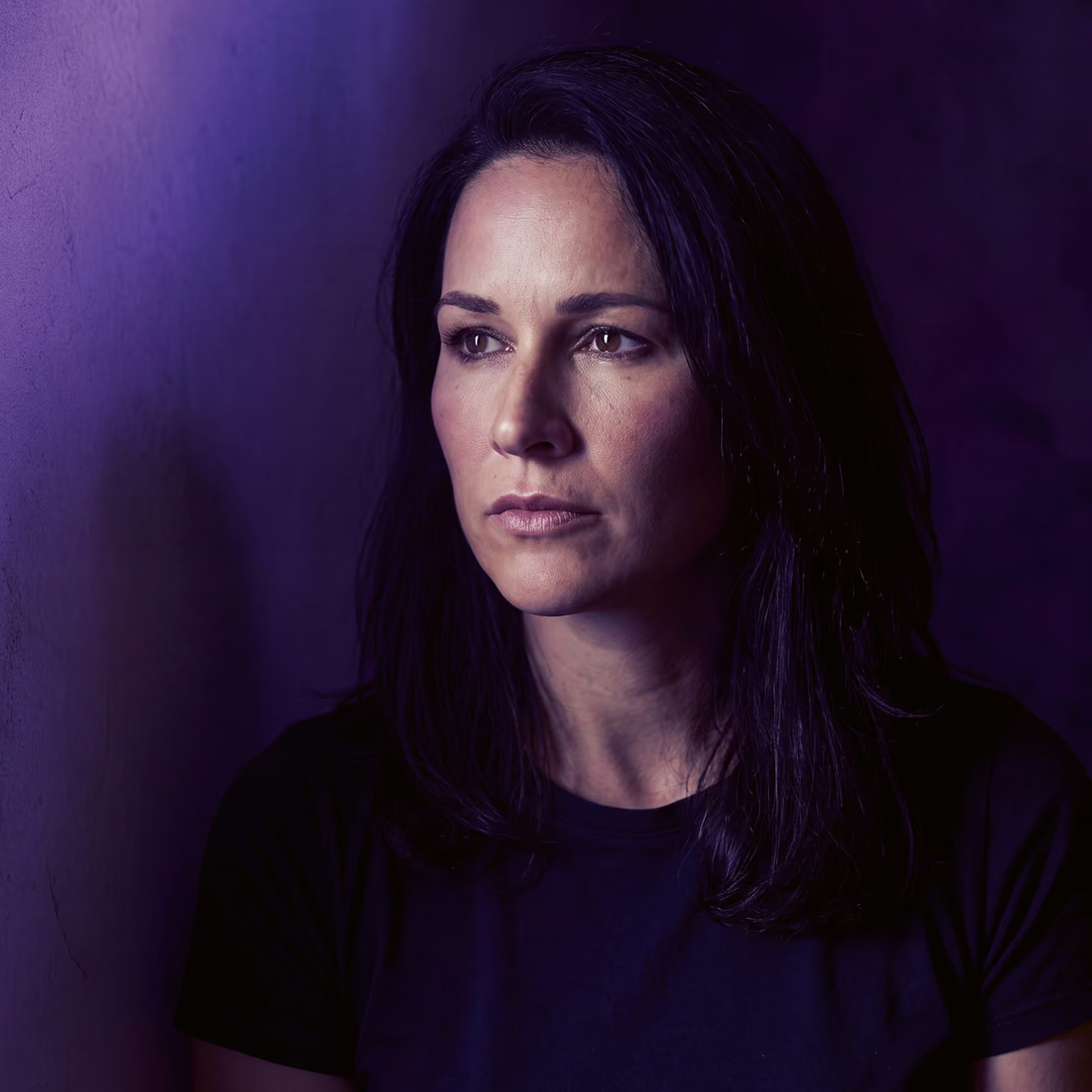
Natalie Monbiot is founder of the Virtual Human Economy and co-founder of Hour One, one of the first AI avatar companies. Oxford-educated, her areas of expertise are AI twins, virtual humans, digital identity and the future of work and education.
What is your greatest hope and your greatest fear for the coming age of AI?
That human beings are the beneficiaries of the AI revolution, increasing our own agency. There are many ways that this can go wrong. We’ve just invented the most aggressive tool for instant gratification to make it even harder for us to reinvest in delayed gratification. My fear is that it can disempower us, and there is evidence that it does that without even trying because we are complicit.
What critical skills do leaders need to acquire – and in what time frame – to remain both relevant and in charge?
Leaders will become the orchestrators of their company’s culture. What is the role of humans in your company? Some companies will be all about efficiency and agents. Others can be much more people-centric, because that is what differentiates them.
What role do you see Gen Z and Gen Alpha – some people call them AI natives – playing in this new world?
The best-case scenario is they’re leveraging these tools to become really savvy, knowledgeable and well equipped by the time they hit the workforce. The biggest challenge is that students can check out of their education more easily and be ill prepared because they have skipped the process of actually learning the skills that are required to thrive in this new AI-first era.
What particular areas of decision-making should not be delegated to AI?
It’s very tempting to just ask the AI to tell you what you should do or say to others. Then you go do it and regret it, because you cannot outsource interpersonal decisions. You need to do the work yourself – struggling through what makes sense, use your instincts, experience and mental models. It might cause friction, but you can't rely on an AI to do that for you.

Andrew Keen is executive director of FutureCast in Silicon Valley and a prominent critic of digital culture and the technology industry, calling himself the “Antichrist of Silicon Valley.” His expertise spans internet society, digital disruption and tech ethics.
How do you see the nature and essence of leadership evolving now as AI starts to become even more pervasive and powerful?
I think leaders are mostly born rather than trained. So, the idea of an AI training a leader is a contradiction in terms. If humans rely on AI to be good leaders, they’re, by definition, not very good, very ordinary, and will probably fail. The great leaders in the future, even in the age of AI, will probably be self-taught or born or natural.
What are crucial watershed moments for leaders or executives when they need to decide whether they want to “hire” or “fire” AI?
No one’s going to fire AI. If you run a company, it’s like being against steam or electricity. You can do that, but as a corporate leader, you’re inviting catastrophe. There will certainly be wonderful economic opportunities for people who want to create products and services that reject AI, just as vinyl has prospered in the age of MP3.
Assuming that Gen Z and Gen Alpha grow up as AI natives, what role will they play in this world of automated and augmented work?
There’ll be an increasing nostalgia for the pre-AI age. In the future, the unborn AI generation will likely be very nostalgic for a world before it. A lot of it will depend on the kind of world that AI creates. The best-case scenario is that people will appreciate it or create new work, more flourishing, more economic prosperity, more human understanding. It’s like the world before and after email or before and after automobiles, trains, electricity or steam. You just can’t imagine going back.
What are particular areas of decision-making that you believe should stay reserved for humans?
None. The idea that humans made good decisions before we had all this technology is another kind of misguided, delusional nostalgia. Humans have always made bad decisions, that’s what makes us human. AI always comes with values, so the idea of replacing human decision-making is wrong. Someone’s feeding the AI and creating the value system that will determine what AI tells you. That’s not outsourcing human decision-making, but simply reintroducing a certain value system of human decision-making through the back door. Even if we were to create some sort of overclass of machines with souls or their own consciousness, I have no idea how these machines will think in a post-human way that won’t incorporate any of our values.
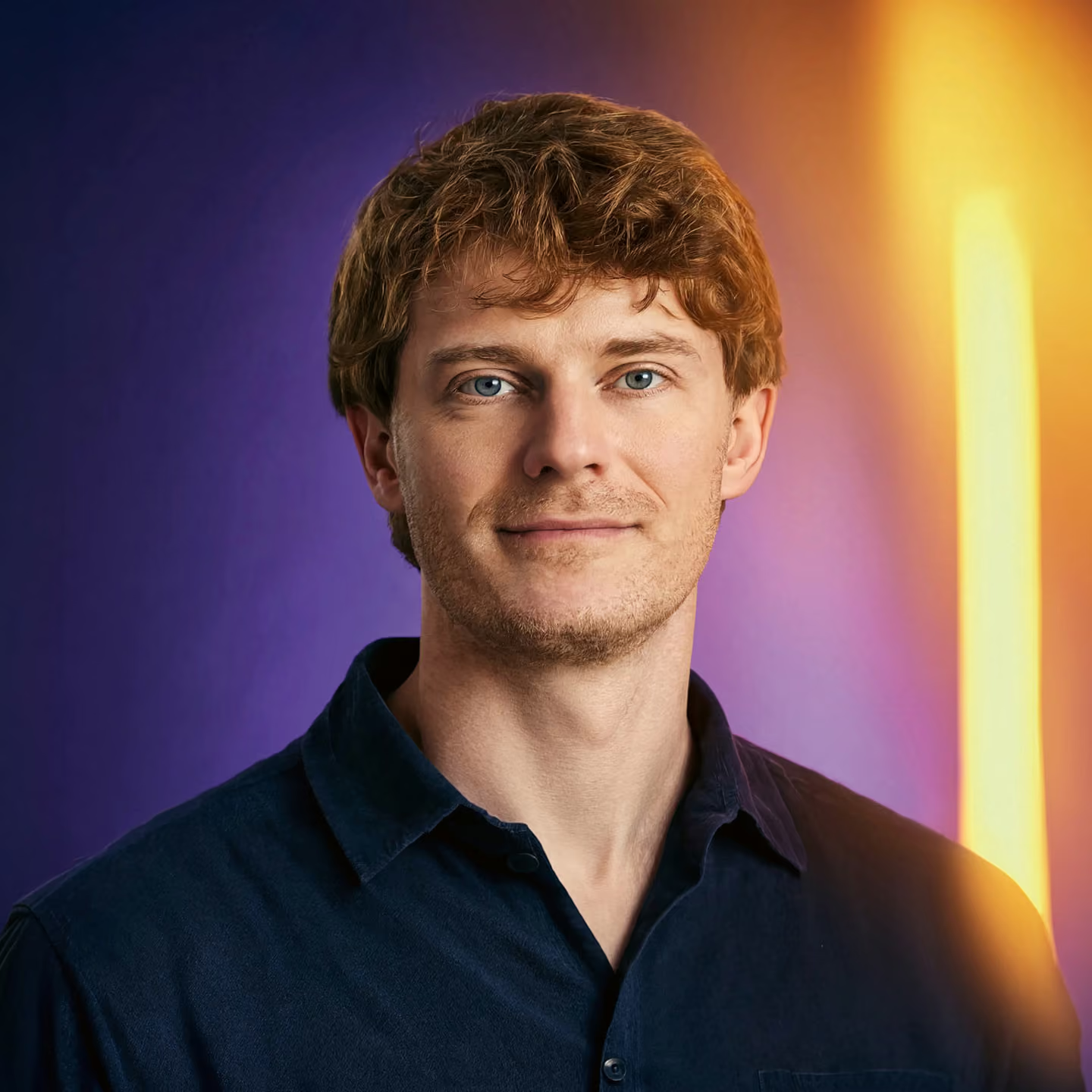
Richard Socher is the CEO and co-founder of Recursive, CEO and founder of You.com and founder and managing partner at AIX Ventures. He was previously an adjunct professor of computer science at Stanford and the chief scientist at Salesforce. He is known for his pioneering research in how neural networks understand language.
What is your greatest hope and your greatest fear for the coming age of AI?
My greatest hope is that we can usher in a new age of scientific discovery. We at some point discovered the scientific method and started questioning hypotheses we created, collecting data for them and making more and more discoveries. I think we can now automate that, and that will change all of humanity in a very positive way. My biggest fear is that a lot of people are afraid of change and will want to off-ramp from progress. That will create potentially more inequality, often self-inflicted.
How do you think artificial general intelligence (AGI) or superintelligence will change how businesses and national economies operate?
How businesses and how economies operate will change quite significantly as businesses will be able to scale much more with just access to compute and the right superintelligent systems. The people, the companies and the countries that lean into this technology are the ones that will become more and more productive.
What’s the biggest weakness of AI as we know it today — and how do you think we will overcome it in due time?
The main issue with AI is that it’s still very dependent on the intelligence and intuitions of people to innovate and it cannot self-improve. Once we solve that, I think we will see even more incredible progress. I think we can get there in the next year or two.
What are particular areas of decision-making that should stay reserved for humans?
In the business sense, there are very few things that should be completely off-limits. AI can be a very useful partner at almost every level.
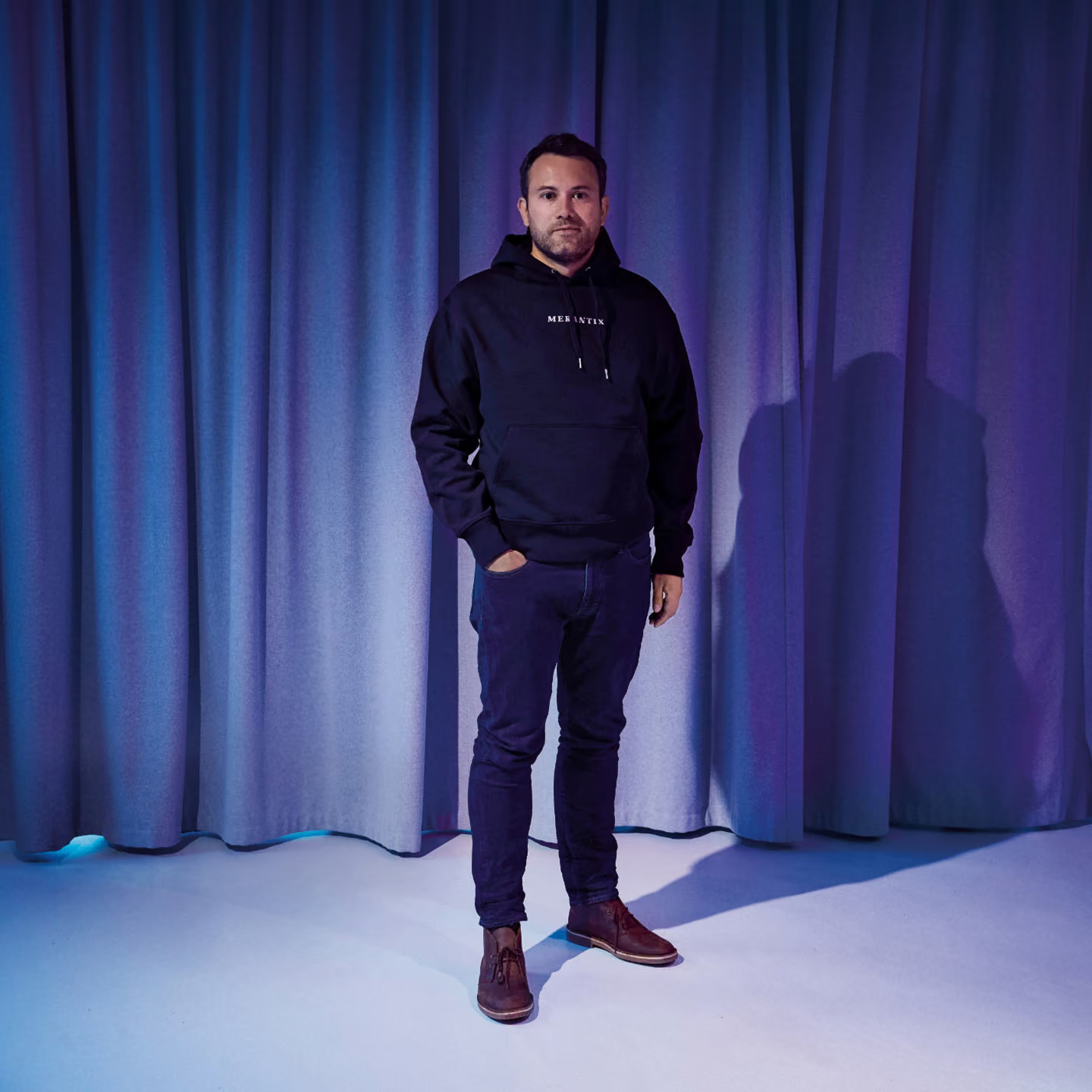
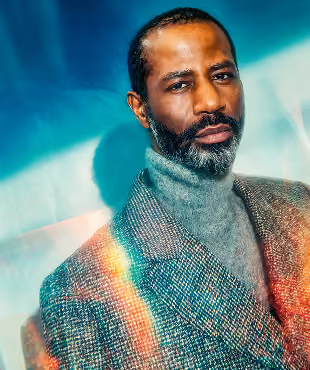
Rasmus Rothe is founder and general partner of Merantix Capital in Berlin, an AI-focused venture firm, where the Merantix AI Campus is housed. He holds a PhD in computer vision from ETH Zurich and studied at Oxford and Princeton with expertise in deep learning, health care AI and building AI companies.
What is your greatest hope and your greatest fear for the coming age of AI?
My greatest hope is that AI becomes the true lever for solving the biggest societal challenges, from improving our health systems, addressing aging workforces and productivity gaps, strengthening key European industries or accelerating science. My greatest fear is not technological failure or a science fiction paranoia about the machines taking over. It’s a collective lack of ambition. If we think too small and worry too much about the risks, we will miss the broader opportunity. Particularly in Europe, where we can’t afford to stall or underinvest (or under-imagine) what’s possible.
How do you see the nature and essence of leadership evolving as AI becomes more pervasive and powerful?
Human leaders will act as system architects, designing workflows where humans and agents interact. Leadership will become more about how to orchestrate intelligence at scale across an organization.
How do you think artificial general intelligence (AGI) or superintelligence will change how businesses and national economies operate?
When we look into making an investment, we often run this thought experiment: If “AGI” or “superintelligence” exists, does this business still exist? That forces clarity around where value truly lies. If intelligence becomes abundant, competitive advantage must lie elsewhere, like in distribution, in embedded workflows, in network effects and ultimately in trust with the customer. On the macro level, countries and ecosystems that can build infrastructure and attract talent will see productivity gains and more economic strength.
What’s the riskiest dead end that current AI research and commercial deployments might go down today – or are already going down?
The risk is less a technical dead end and more about where we want to focus the attention and energy. With the start of the internet, the real long-term value didn't lie in the infrastructure itself but with those companies that were able to build applications on top of that technology. I think we’re at the same point with AI, where it will become increasingly clear the true value lies with who can leverage the technology the best and build on top of it. I believe that AI will be the key tool behind a better society.

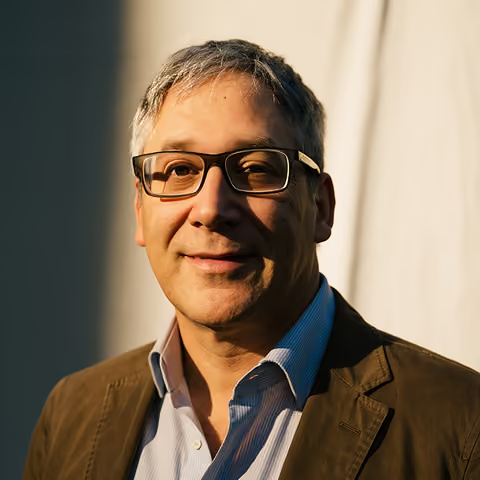
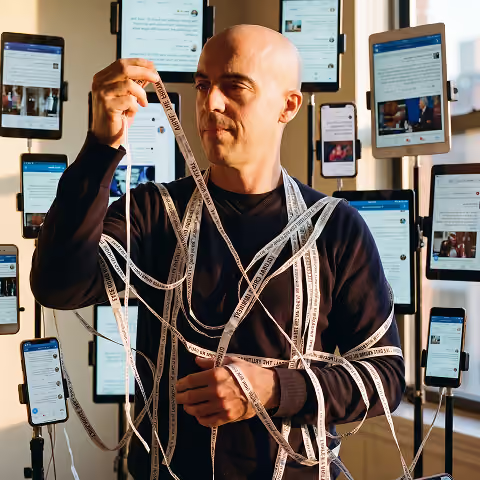
From the previous issue – “Becoming artificial”





Stay ahead of the curve!
Sign up for our newsletter and let Think:Act bring you up to speed with what is happening today and guide you on what’s happening next.






.svg)
