
Climate change is rewiring the food industry
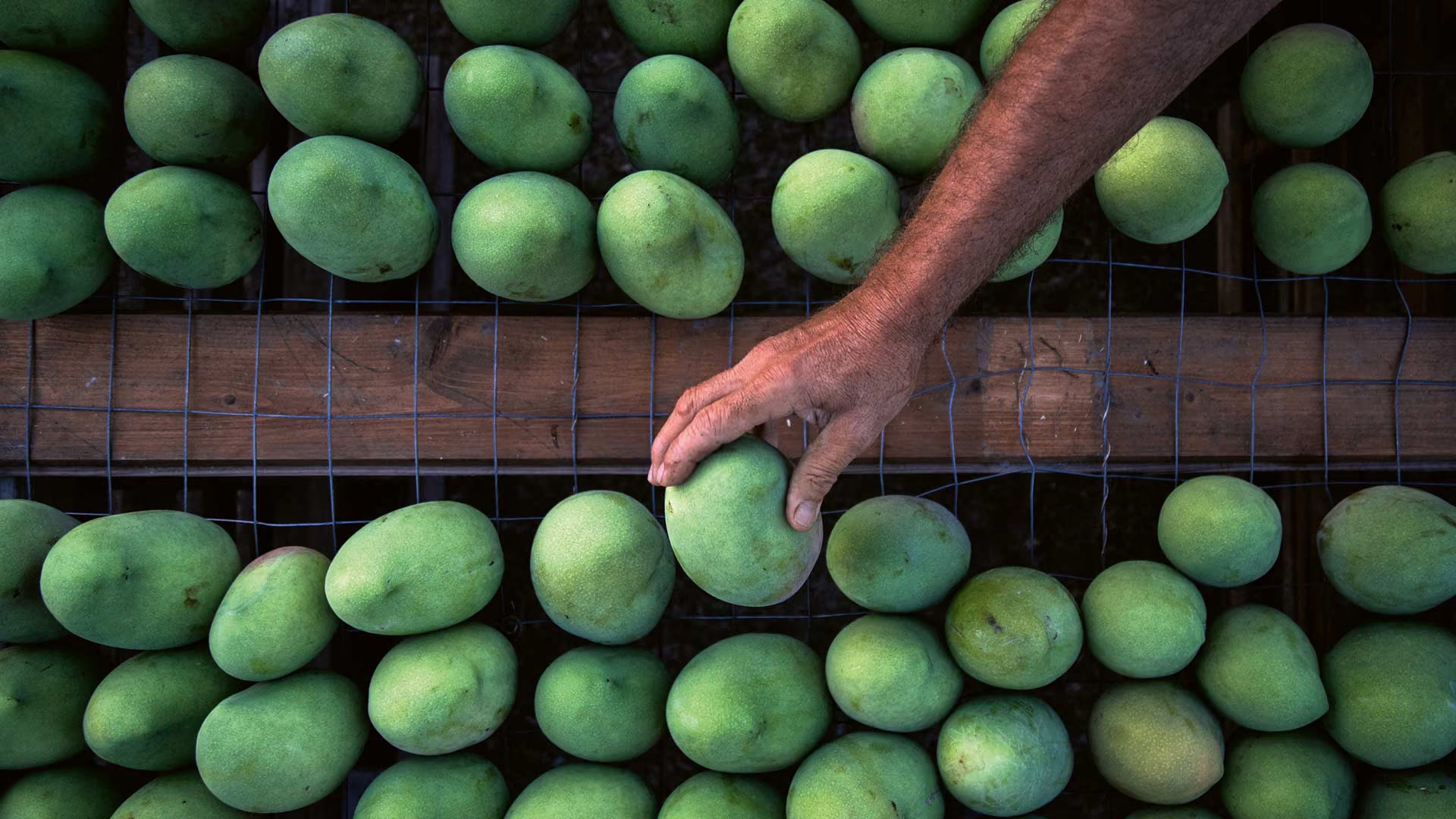
From recipe tweaks to relocation and multi-origin sourcing, an unstable climate is calling for ingenuity in agriculture and food production. The changes are a signal of a deeper shift in how the global food system is being managed.
In the juice aisle, climate change does not announce itself with melting glaciers or distant wildfires. It shows up as a missing staple. Severe drought in Brazil, the world’s largest supplier of orange juice, and the spread of disease have tightened supply and driven prices higher. Producers are now exploring a workaround that would have sounded implausible only a few years ago: “orange” juice that is partly mandarin.
What looks like a minor recipe tweak is, in fact, a structural shift. Climate change is forcing companies to redesign products, supply chains and even regulatory definitions around a new assumption: crops will no longer stay where they historically belonged. These adaptations are coalescing around a small number of recurring strategies. Sometimes companies substitute one ingredient for another, replacing a scarce crop with a functional stand-in. Sometimes they keep the crop but change the genetics, breeding varieties that tolerate heat, drought or disease. A third response is geographic arbitrage, shifting production into new regions as climate zones migrate. And at the furthest edge, some are bypassing agriculture altogether, recreating familiar ingredients through fermentation or cell culture. Together, these moves amount to what executives increasingly describe as “crop swaps” – not a single tactic, but a portfolio of ways to preserve continuity in an unstable climate.
Climate-adapted
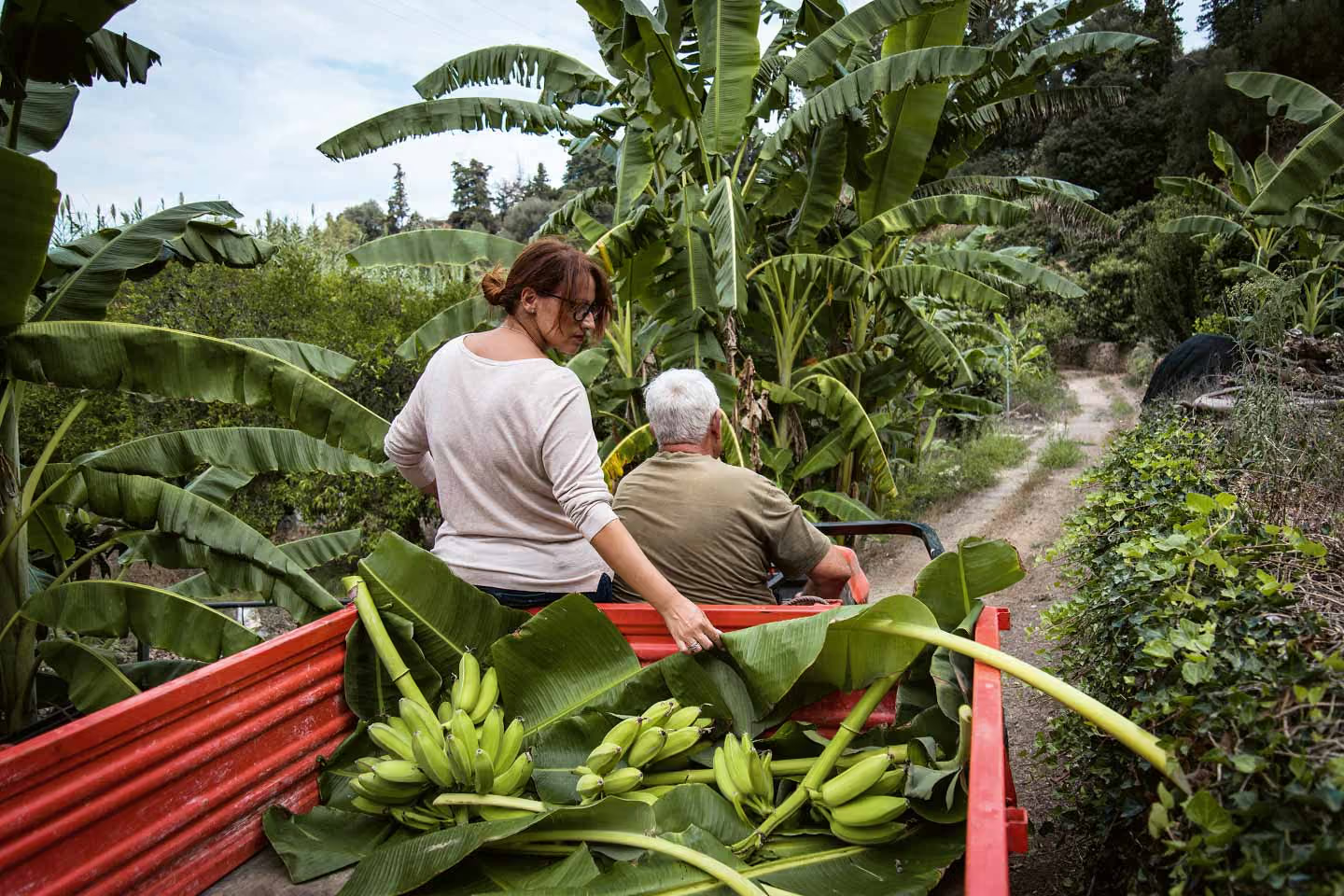
In just the last few years, some effects of climate change including higher winter temperatures and humidity have enabled banana cultivation where it was previously unheard of, including parts of Italy.
Today, no prudent food company relies on a single geography for a critical input if it can avoid it. At the same time, R&D budgets are being redirected away from marginal product improvements toward something more existential: preserving taste, texture and reliability, even as inputs change. “Climate change is going to rewrite how food is grown, how it’s made, how it’s transported, how it’s enjoyed,” says Margaret Henry, who leads work on regenerative agriculture and resilience at PepsiCo. For her, the risk is not a single poor harvest, but losing the ability to deliver the same product, at scale, year after year.
Few supply chains illustrate the challenge more clearly than orange juice. The global orange juice system today revolves around a single center of gravity. Brazil’s citrus belt accounts for roughly 70% of global orange juice exports. When that system falters, replacement is not straightforward. In mid-2024, the country’s orange harvest was forecast to be around 25% lower than the previous year, marking the third weak season in a row. Extreme heat and drought had stressed trees during flowering, accelerating the spread of citrus greening, an incurable disease that has ravaged groves across São Paulo state. In Florida, once the other great heartland of the industry, hurricanes and the same disease have all but wiped out production.
The consequences were immediate. Global orange juice supplies plunged to their lowest point in decades and frozen concentrate futures hit a new high of $4.95 a pound in May 2024 before nearing $5.50 by the end of the year. Demand fell as prices rose. Producers have little choice but to look elsewhere. “You go to Mexico, or South Africa, the Mediterranean,” says Kees Cools, president of the International Fruit and Vegetable Juice Association. “But these sources don’t have the economy of scale like Brazil has.” Brazil’s dominance in orange juice is about infrastructure as much as climate. Processing plants, cold storage, logistics and ports have been built around a citrus belt that took decades to develop. Orchards can move. Industrial ecosystems are another matter. As climate pressure shifts production potential northward, southward or uphill, companies face a choice between paying a continuity premium to keep existing systems running, or making long-term bets on entirely new geographies.
Reformulation offers a second lever. But that comes with its own limits. As a producer, “let’s say I would normally develop 100% orange juice. Maybe this time I would develop a citrus mix where orange is there, some mandarin, some grapefruit, some lemon, and it gives kind of a citrus orangey taste, but it’s not composed of one fruit only,” Cools says. Yet while in the US there is a 10% flexibility to blend other citrus fruits, in Europe, orange juice must be made from the citrus sinensis fruit. The industry is now lobbying Codex Alimentarius, the UN-backed food standards body, to modernize definitions so that hybrids or future greening-resistant varieties could be used without undermining consumer trust. But that process is slow, and it raises a thorny question: How much can you tweak a product before it isn’t what it claims?
Reformulation offers a second lever. But that comes with its own limits. As a producer, “let’s say I would normally develop 100% orange juice. Maybe this time I would develop a citrus mix where orange is there, some mandarin, some grapefruit, some lemon, and it gives kind of a citrus orangey taste, but it’s not composed of one fruit only,” Cools says. Yet while in the US there is a 10% flexibility to blend other citrus fruits, in Europe, orange juice must be made from the citrus sinensis fruit. The industry is now lobbying Codex Alimentarius, the UN-backed food standards body, to modernize definitions so that hybrids or future greening-resistant varieties could be used without undermining consumer trust. But that process is slow, and it raises a thorny question: How much can you tweak a product before it isn’t what it claims?
Reformulation offers a second lever. But that comes with its own limits. As a producer, “let’s say I would normally develop 100% orange juice. Maybe this time I would develop a citrus mix where orange is there, some mandarin, some grapefruit, some lemon, and it gives kind of a citrus orangey taste, but it’s not composed of one fruit only,” Cools says. Yet while in the US there is a 10% flexibility to blend other citrus fruits, in Europe, orange juice must be made from the citrus sinensis fruit. The industry is now lobbying Codex Alimentarius, the UN-backed food standards body, to modernize definitions so that hybrids or future greening-resistant varieties could be used without undermining consumer trust. But that process is slow, and it raises a thorny question: How much can you tweak a product before it isn’t what it claims?
Reformulation offers a second lever. But that comes with its own limits. As a producer, “let’s say I would normally develop 100% orange juice. Maybe this time I would develop a citrus mix where orange is there, some mandarin, some grapefruit, some lemon, and it gives kind of a citrus orangey taste, but it’s not composed of one fruit only,” Cools says. Yet while in the US there is a 10% flexibility to blend other citrus fruits, in Europe, orange juice must be made from the citrus sinensis fruit. The industry is now lobbying Codex Alimentarius, the UN-backed food standards body, to modernize definitions so that hybrids or future greening-resistant varieties could be used without undermining consumer trust. But that process is slow, and it raises a thorny question: How much can you tweak a product before it isn’t what it claims?
Reformulation offers a second lever. But that comes with its own limits. As a producer, “let’s say I would normally develop 100% orange juice. Maybe this time I would develop a citrus mix where orange is there, some mandarin, some grapefruit, some lemon, and it gives kind of a citrus orangey taste, but it’s not composed of one fruit only,” Cools says. Yet while in the US there is a 10% flexibility to blend other citrus fruits, in Europe, orange juice must be made from the citrus sinensis fruit. The industry is now lobbying Codex Alimentarius, the UN-backed food standards body, to modernize definitions so that hybrids or future greening-resistant varieties could be used without undermining consumer trust. But that process is slow, and it raises a thorny question: How much can you tweak a product before it isn’t what it claims?
Weighing the cost
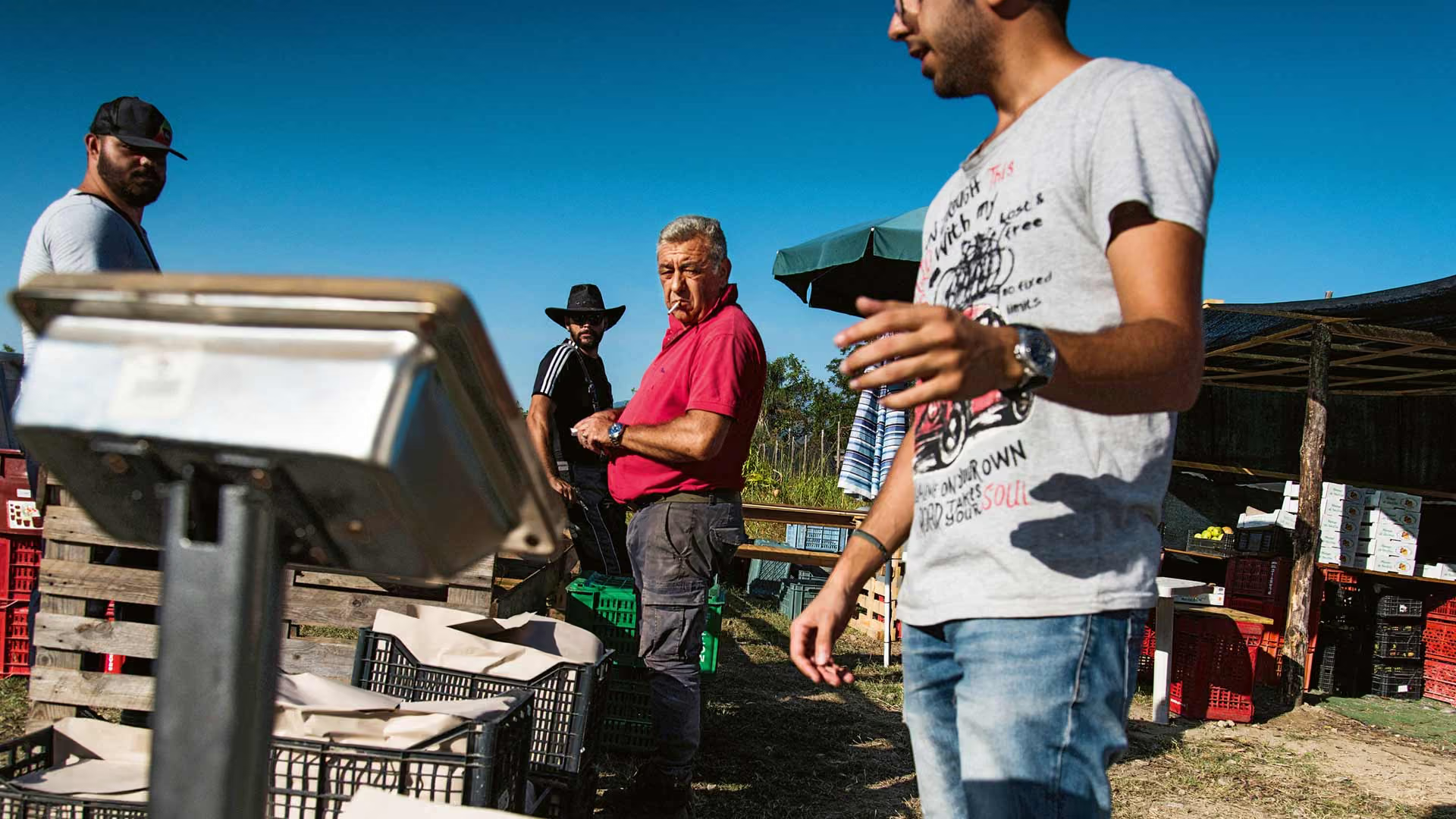
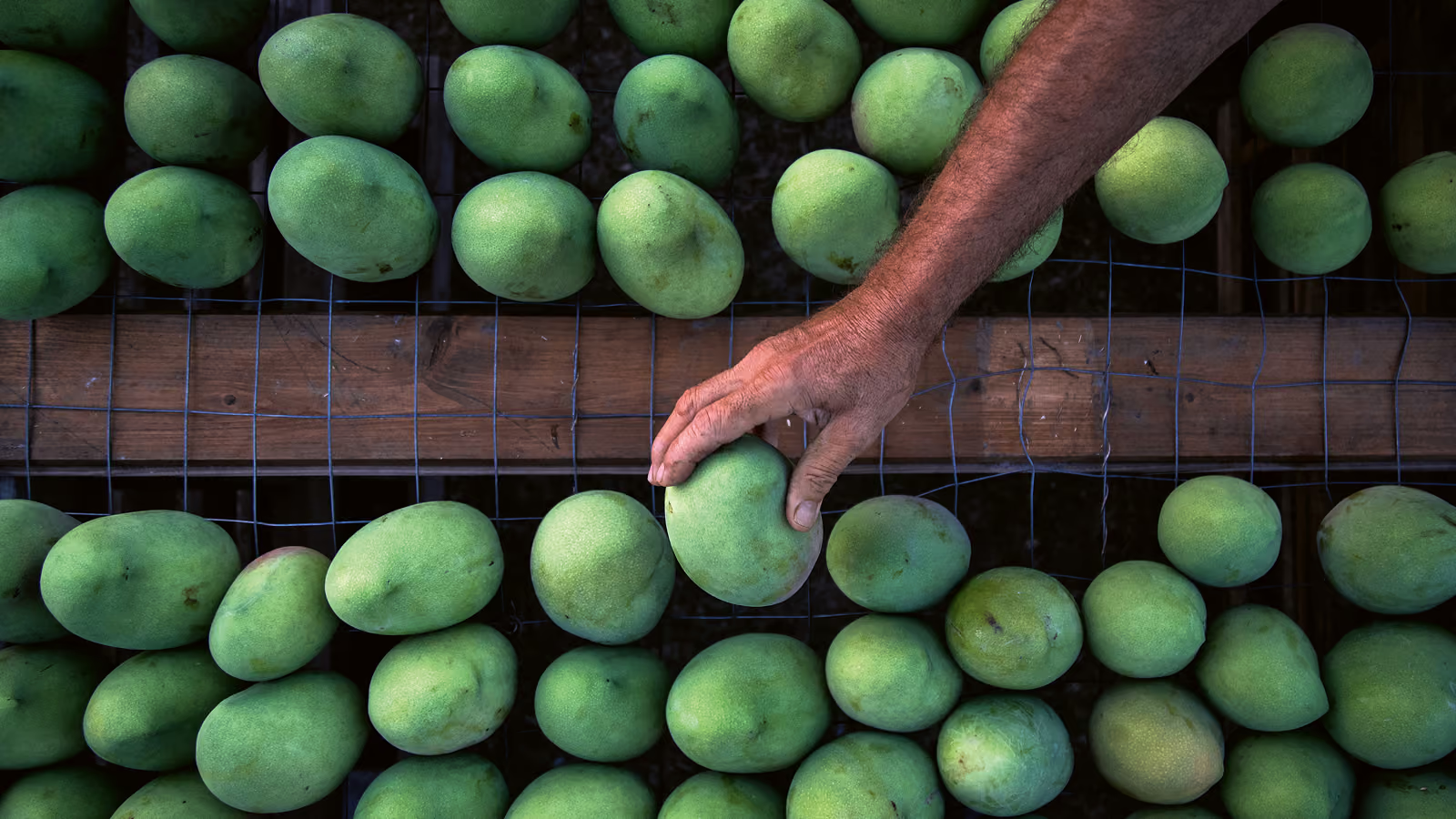
As shifting rainfall and temperature averages drive more unpredictable crop outputs in many regions, production is finding new and once unlikely homes, for example in Sicily, where the Tropical Fruit company specializes in the production and sale of mangoes.
Chocolate offers a starker version of that dilemma. In the UK, Nestlé’s Toffee Crisp and Blue Riband bars were recently downgraded from being labeled as “milk chocolate” to having a “milk chocolate flavor coating” after recipe changes left them below the legal cocoa thresholds. Behind those labels lies a deeper crisis. Over 70% of supply comes from West Africa’s humid tropics. Those regions have seen erratic rainfall, new pests and scorching dry seasons that imperil cocoa yields. Scientists warn that a third of current cocoa-growing areas could become climatically unsuitable by 2050.
The result was an extraordinary price surge. By early 2024, cocoa futures touched $12,000 per ton, up from the low thousands only a few years earlier. “Climate change has accelerated existing fragilities,” says Stéphane Detaille, head of ESG for Nestlé’s confectionery business. After years of steady growth, cocoa production has hit what he calls “a big hiccup”: the impact of climate change compounded by years of underinvestment in plantations.
In the short term, chocolate companies have responded by shrinking bar sizes and tweaking fat composition. In the medium term, they are diversifying geography to offset West African risk. “Brazil is very important for us as a business,” says Detaille, adding that “naturally” Nestlé’s cocoa production in Latin America increased in 2023 and 2024 compared with 2022. But, he added, Ivory Coast “will stay the biggest sourcing region for years to come.”
Detaille is clear that resilience starts further upstream. Nestlé’s Income Accelerator program pays incentives directly to cocoa-farming households to support practices linked to productivity and climate resilience. Yet resilience cannot be imposed through contracts alone, he says. It has to be enabled through income stability, shared labor models and practices that reduce risk across entire communities rather than individual plots. Nestlé has helped establish pruning groups that work across holdings, reducing disease risk and labor bottlenecks. Agroforestry – using shade trees to buffer heat and diversify income – is expanding.
Ready to eat
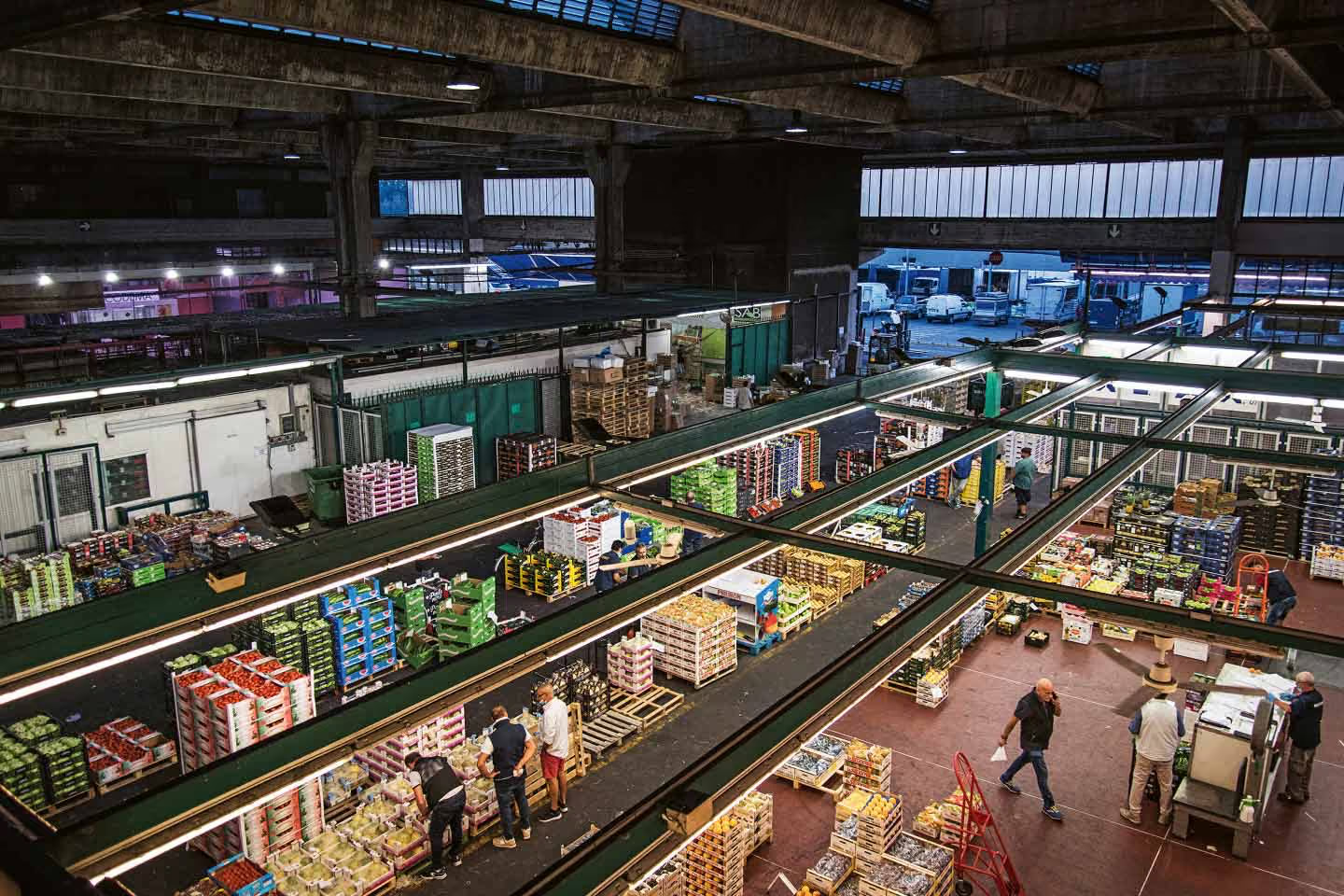
At Milan’s Mercato Ortofrutticolo, Italy’s largest wholesale fruit and vegetable market, local demand for exotic fruits is increasing in step with the new sources of local supply.
Even so, geography and agronomy may not be enough. A growing number of companies are hedging more radically by trying to make chocolate without cocoa beans at all. California-based Voyage Foods uses grape seeds, sunflower oil and shea butter to create cocoa-free chocolate analogs with a fraction of the carbon footprint. Europe’s Planet A Foods ferments oats and sunflower seeds into ChoViva, now used in products sold by retailers and premium brands alike. These substitutes aim to supplement, not replace, traditional cocoa as an insurance against extreme volatility.
The most radical hedge against cocoa volatility does not involve farms at all. Biotech firms are pursuing “lab-grown” cocoa. Using cellular agriculture, they culture cocoa plant cells in bioreactors to produce authentic cocoa ingredients in vitro. Michal Beressi Golomb, CEO of Celleste Bio, says the company was founded to solve a business problem. “Brands suffer from the volatility in the cocoa market, and they want to hedge themselves,” she says. Celleste grows cocoa cells in bioreactors to produce cocoa butter and cocoa solids with the same chemical profile as conventional cocoa. “They behave like cocoa in chocolate,” Beressi Golomb says, referring to tempering, snap and melt. The bottleneck, she argues, is scaling and economics rather than biology. The advantage, she argues, is that “when you plant a cocoa tree, it takes four to seven years before it produces,”
Beressi Golomb says. “In our system, production cycles are measured in weeks.” Celleste expects to reach the market around 2028, shaped by regulatory timelines and the challenge of industrial throughput. Mondelēz is a strategic investor and design partner. The likely model is blending rather than replacement, using cell-cultured cocoa to stabilize fat composition and reduce supply shock exposure. “We’re not aiming to replace,” Beressi Golomb says. “We supplement.”
“When you plant a cocoa tree, it takes four to seven years before it produces. In our system, production cycles are measured in weeks.”
Cost and supply can be engineered around, but taste is harder to cheat. Arabica coffee, prized for its flavor, grows within a narrow temperature band and is sensitive to heat and rainfall variability. Climate models suggest that by mid-century, large areas of today’s arabica farmland could become unsuitable. Growers are responding in two ways: moving uphill where land exists, and switching species.
Robusta coffee tolerates higher temperatures and more erratic rainfall – and yields more beans per tree. Brazil, long synonymous with arabica, has sharply increased robusta production over the past decade. Analysts note that the shift has been driven less by consumer demand than by climate-related losses in arabica. For growers, adaptation comes with social cost. Switching to robusta often means lower prices and altered status in global markets. Crop swaps, in this context, redistribute value as well as risk. But the major problem is taste. Robusta has, historically, been associated with bitterness and lower quality, and increasing its share in blends risks altering flavor profiles that brands have spent decades standardizing.
Nestlé is one of the companies that is doubling down on R&D to preserve flavor and quality even as inputs change. Alongside investments in robusta, it is deploying data science and genetics to breed better arabica. In 2024 Nestlé published a high-quality arabica genome reference and launched a global breeding effort to find strains with both robust flavor and resilience to heat and drought. The company’s plant scientists have already rolled out new arabica varieties that can tolerate harsher conditions. The goal is to “buy time” against climate change by improving the plant itself, delaying or minimizing the need to switch to more robusta. In parallel, quality control labs are working on blending techniques, mixing different origins, roast levels or adding natural flavor extracts to mask any minor “taste drift” that does occur when ingredient profiles shift.
Turning up the heat on gene editing
Genetic modification has long promised to make agriculture more productive and resilient. As climate change accelerates crop losses, that promise is being tested again – and so are the unresolved debates that surround it.
Not all genetic technologies are the same. Traditional transgenic GM crops introduce foreign DNA and are already widely used in the Americas, particularly in corn, soy and cotton. Gene-editing tools such as CRISPR work more precisely, altering a plant’s existing genes to improve traits like heat tolerance or disease resistance, and are increasingly being used in crops such as wheat, rice and bananas. Proponents argue these tools can adapt crops faster than conventional breeding, at a pace that climate change now demands.
Critics, however, question whether genetic fixes address the right problem. Concerns persist about long-term ecological effects, from herbicide-resistant weeds to reduced biodiversity, as well as the concentration of seed ownership in a small number of companies. Others argue that focusing on genetics risks crowding out deeper reforms in soil health, water management and farming systems.
Regulation reflects these tensions. While the US, Brazil and parts of Asia have embraced gene editing, Europe remains cautious. As climate pressure mounts, the debate is no longer whether genetic tools belong in agriculture, but how – and under whose control – they should be used.
Similar efforts are underway elsewhere. Brewers, for instance, worry about barley, the key grain for beer malt. Warmer, drier weather has already caused barley crop failures and wild price swings, threatening the $600 billion global beer industry. European brewmasters are responding by trialing new, heat-tolerant barley strains. In 2023, Carlsberg unveiled an experimental lager made with a barley variety bred to thrive in high heat and drought – literally a “cool beer for a warm planet,” as the company quipped. Its competitors, like AB InBev, are likewise investing in seed R&D, aiming to release new resilient barley varieties at an unprecedented pace to stay ahead of climate shifts. Drought-resistant barley (and new practices like regenerative farming of grain) ensures beer can keep flowing even if the traditional barley heartlands in Europe or Australia become too parched.
For PepsiCo, whose snack brands rely on consistency of taste, color, crispness and frying behavior, a potato is not just a potato. Henry says climate stress shows up in practical, commercial terms. “These weather patterns could impact yielding, quality, just reliability of having good quality products that we can offer to our customers,” she says. “We are investing in proprietary potato varieties,” she adds. “We have different varieties for where there’s more droughts, more floods.”
Genetics alone, however, aren’t enough. PepsiCo is pairing varietal investment with AI-driven climate modeling designed to narrow uncertainty at farm level. Rather than relying on long-range climate projections that are too abstract to guide planting decisions, the company uses predictive tools to flag heat stress, water scarcity and yield risk months in advance. That allows sourcing plans, irrigation strategies and even crop rotations to be adjusted early enough to matter. “It’s not about predicting the future perfectly,” Henry says, “but about narrowing uncertainty enough to act sooner.”
“It’s not about predicting the future perfectly, but about narrowing uncertainty enough to act sooner.”
What links orange juice, chocolate, coffee, beer and crisps is not the novelty of substitution, but the scale at which it is now occurring. What were once marginal adjustments – a blend here, a new variety there – are becoming core operating decisions. The result is an emerging redefinition of resilience. It is no longer measured solely in yields or margins, but in optionality: the ability to switch origins without breaking supply chains, to adjust recipes without breaking trust, to intervene upstream without taking on responsibilities once left to governments or development agencies. In some cases, resilience means paying more to preserve familiarity. In others, it means redefining what familiarity looks like.
For consumers, many of these changes will remain invisible, at least at first. A citrus blend that still tastes like orange. A chocolate bar that snaps the same way. A coffee that still smells right when the packet is opened. But the work required to deliver that sense of normality is increasing, and so is the cost of failure. Crop swaps, then, are not a passing response to a few bad harvests. They are an early signal of a deeper shift in how the global food system is managed: less reliant on stable climates, more dependent on science, capital and coordination. The question is no longer whether food will change as the planet warms, but how much change consumers, companies and regulators are willing to accept in order to keep everyday products recognizable.








Stay ahead of the curve!
Sign up for our newsletter and let Think:Act bring you up to speed with what is happening today and guide you on what’s happening next.







.svg)
