

Bill George on redefining authentic leadership
Amid unpredictable policies and global turbulence, even the strongest companies can falter. Bill George explains to Think:Act how a steadfast foundation of values can help leaders weather the storms ahead.

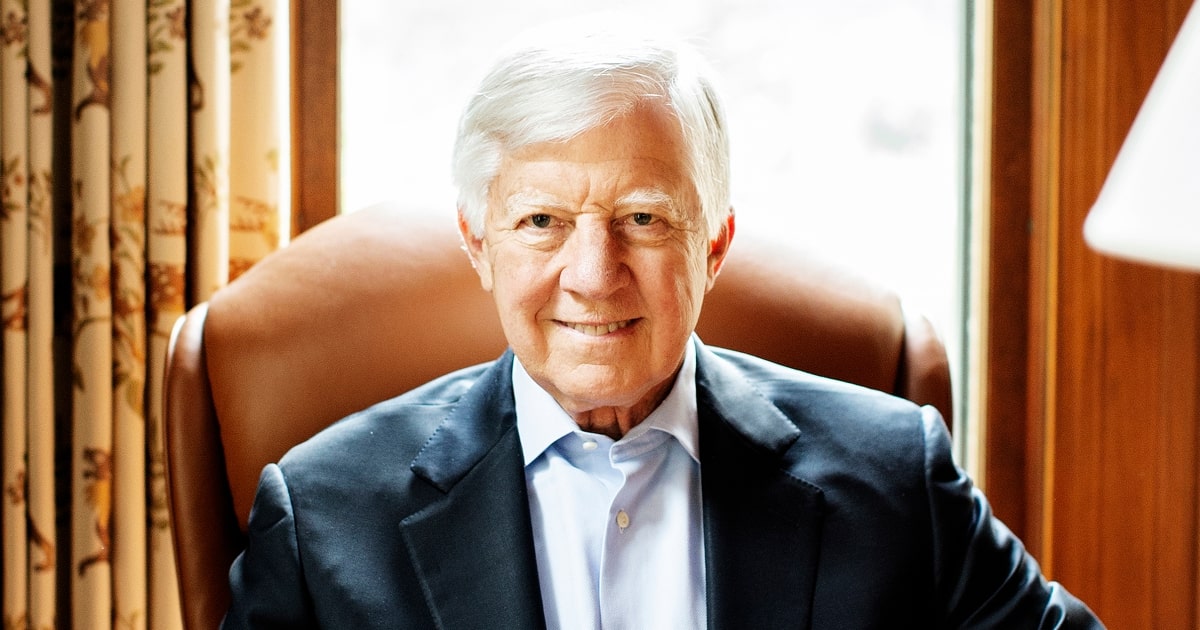
between 10 years serving as chief of a fast-growing medical device maker and nearly 20 years as a popular professor at Harvard Business School, there aren’t many conventional business problems that Bill George hasn’t seen before. But today’s most serious challenges are anything but conventional. In a wide-ranging conversation with Think:Act that draws on his years as head of Medtronic and subsequent research, the octogenarian leadership expert and the author of the True North series of books and Authentic Leadership talks about the unprecedented nature of today’s global challenges, why he believes ethical leadership remains the best and smartest policy, despite pressures to take shortcuts. At the same time, however, he also counsels against public grandstanding if forced into some kind of showdown with a government. Finally, George offers his thoughts on how crucial it is for younger executives to gain international exposure to prepare them to lead a global business.
How are today’s business challenges different?
In the past, we could teach every business problem as a complicated problem to be solved. You look at all the aspects, people work on it, and you put the pieces of the solution back together. Today, that doesn’t work. We’re dealing with very complex problems. We don’t have a solution that can be taken apart into its pieces and put back together. It’s much more like an avalanche coming down – you have to get out of the way of the avalanche, let it settle, and then come back and make your decisions.
In November 2024, many executives were looking forward to the new [US] administration because it looked like there would be some lessening of regulations. Then came the tariffs, and they threw everything up in the air, because everybody had their business model set around a relatively benign tariff environment. Now, say you want to buy from China, one day the tariff is 10%, or 20%, the next day, it’s 145%, then day 3, it’s 60%. Before you can make any changes to your business model, you just have to wait for the dust to settle, because how can you configure supply chains if you can’t run numbers for what things are going to cost?
Let’s take Corie Barry, CEO of Best Buy. Ninety percent of her goods come from outside the US, mostly from Asia, including all the television sets. There are no sources in the United States that produce television sets, so she’s not going to reshore production, but she doesn’t know what the tariffs will be. So how can she possibly tell her shareholders what their earnings are going to be?
“Your company’s got to be around for another 100 years. That’s your job.”

bill george
is an executive fellow at Harvard Business School, where he was a professor for many years, and the former chairman and CEO of Medtronic. He was formerly a senior executive with Honeywell and Litton Industries and served in the US Department of Defense.
How would you lobby for relief from these kinds of policies?
Before I would talk to a lobbyist, I’d want to explain what’s important to my company. Your clarity of purpose is what defines your company in the eyes of your employees, the eyes of your customers and, ultimately, your shareholders. It’s risky to abandon those principles to meet the needs of politicians or other people who are making strong statements. They may be around for three or four more years, but that’s all. Your company’s got to be around for another 100 years. That’s your job.
Do you have any examples of the difference that kind of self-awareness can make?
Back in January 2025, six days after the inauguration of the current Trump administration, Target CEO Brian Cornell publicly abandoned the values of diversity, equity and inclusion. I served on the Target board for 12 years, and his predecessor once removed, Bob Ulrich, built the company around those principles. Target was serving diverse customers with products that met their needs and encouraging diverse employees. Bob used to say – quite openly, by the way, although Bob was a political conservative – that Target is the most gay-friendly company in town, because he wanted to attract gay designers, diverse designers and heterosexual designers who did not want to work in an exclusionary environment. He wanted to differentiate himself from Walmart, which he did brilliantly, and he had things like the Michael Graves tea kettle and 12-page ads in The New York Times Magazine. That’s what they built upon – “We’re different. We’re Target. We’re Tar-jay” [a playful mispronunciation to give the name a French flair.] By changing that, Cornell lost a lot. His employees don’t know what to think, or what they stand for anymore.
In contrast, Ron Vachris, the CEO of Costco, stood up and said: “We are going to continue to do what we believe. We’re Costco, we know who we are. We know who our customers are. We know who our employees are.”
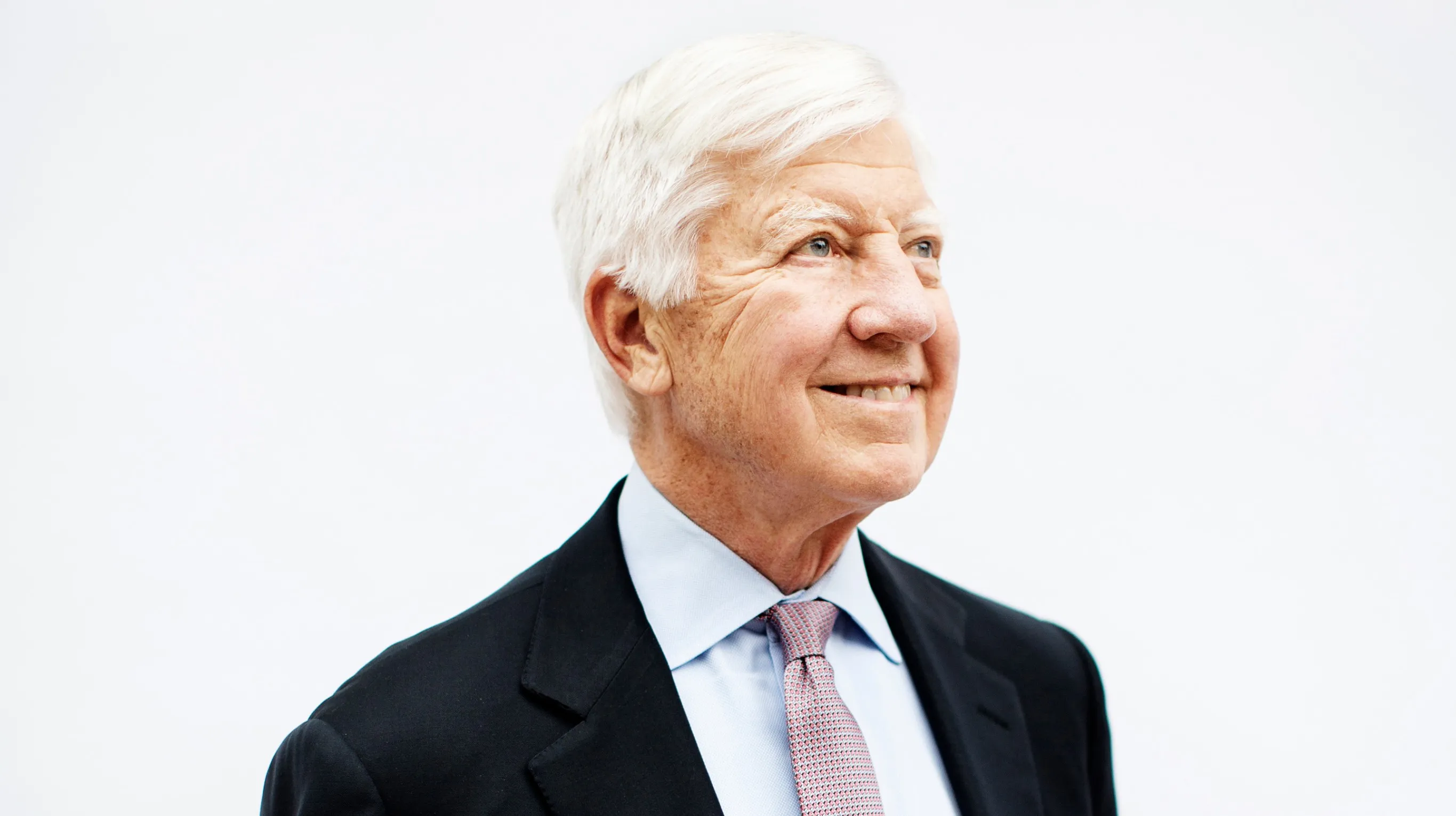
A CLEAR PURPOSE
Renowned for his focus on authenticity and values, Bill George is a prolific author and speaker who advocates for taking a globally minded, ethical approach to leadership as we move through increasingly uncertain times.
Which approach has worked better?
If you look at their results over the last five months, Costco is flourishing and Target is struggling.
How were you able to stay focused on your values at Medtronic?
Medtronic built its reputation around the mission to restore people to full life and health. The primary metric of Medtronic was: How many seconds will it take before another person’s life is restored to full life and health? When I arrived 35 years ago, it was 100 seconds until somebody’s life was restored. When I left in 2002, it was seven seconds. Today it’s two people per second.
You also believe in consistent ethical standards.
If you’re doing business in China or India or the Middle East, it’s not “when in Rome, do as the Romans do.” There is a Medtronic standard. Once I had to fire our president of Europe, who didn’t understand that. We uncovered a bribery scheme he had built on behalf of Italian distributors. He said “that’s the way business is done here” and then accused me of imposing American beliefs on Europeans. I said: “Well, it’s not the way Medtronic does business. Medtronic principles are the same all around the world.”
You can pay an enormous price if you don’t hang on to your principles. Let’s take the instant case. The Trump administration recently announced it’s not going to enforce the Foreign Corrupt Practices Act. Suppose you’re running a global company, and you go along with that, and you pay bribes say in Saudi Arabia, and then a new administration comes in and the Securities and Exchange Commission starts looking into your practices and says, “No, you violated the law, and now you’re in trouble.” These things, they come back to bite you. You’ll regret what you did, and then you can’t undo it.
You are a long-time instructor in the HBS’s program for first-year CEOs. Are there any challenges you emphasize more now than you once did?
People coming into the CEO role are well prepared to deal with the internal business – how to build an organization, create a team, help create strategies, or make good financial numbers for shareholders – but they’re not prepared for external issues. You could say, but Bill, how could you be prepared for Covid-19? And I say, you have to lead in a different way. You have to reaffirm your principles but stay very agile and flexible in your strategy. You can’t have a five or 10-year plan today.
“You can pay an enormous price if you don’t hang on to your principles.”
Takeaways

Does executive training need to change to cope with such a chaotic world?
If you have somebody coming up to be a potential CEO, you need to give them some experience in dealing with the external world. I got my experience early on, when I was president of Honeywell Europe, back in 1983. It was a great experience, living in Brussels and traveling to France and Germany. I think a lot of Americans are not good in other environments. They deal with one culture and they need to get broader exposure. I say, give your people that foreign exposure early in their career. People need intuitive skills to deal with complexity. How do you learn intuition? You have to have experience in dealing with complex problems.
But many countries are making it tougher these days to bring in foreign employees. Is that going to pose a problem for developing global leaders?
Absolutely.
How vocal should you be when you run up against policies, such as restrictive visa rules or tariffs, that could hurt your business?
What I’m telling businesspeople today is stay true to your principles and your values but stay below the radar. You don’t have to put your head up where there is crossfire going on. You don’t have to taunt to stay true to what you believe.
Like Costco?
We have two different worlds colliding – the political world and the internal business world. As a global CEO, you have to navigate that and be prepared for both.

More from this edition



Stay ahead of the curve!
Sign up for our newsletter and let Think:Act bring you up to speed with what is happening today and guide you on what’s happening next.
